Open source RGB lighting control that doesn't depend on manufacturer software


One of the biggest complaints about RGB is the software ecosystem surrounding it. Every manufacturer has their own app, their own brand, their own style. If you want to mix and match devices, you end up with a ton of conflicting, functionally identical apps competing for your background resources. On top of that, these apps are proprietary and Windows-only. Some even require online accounts. What if there was a way to control all of your RGB devices from a single app, on both Windows and Linux, without any nonsense? That is what OpenRGB sets out to achieve. One app to rule them all.


Version 1.0rc2, additional downloads and versions on Releases page

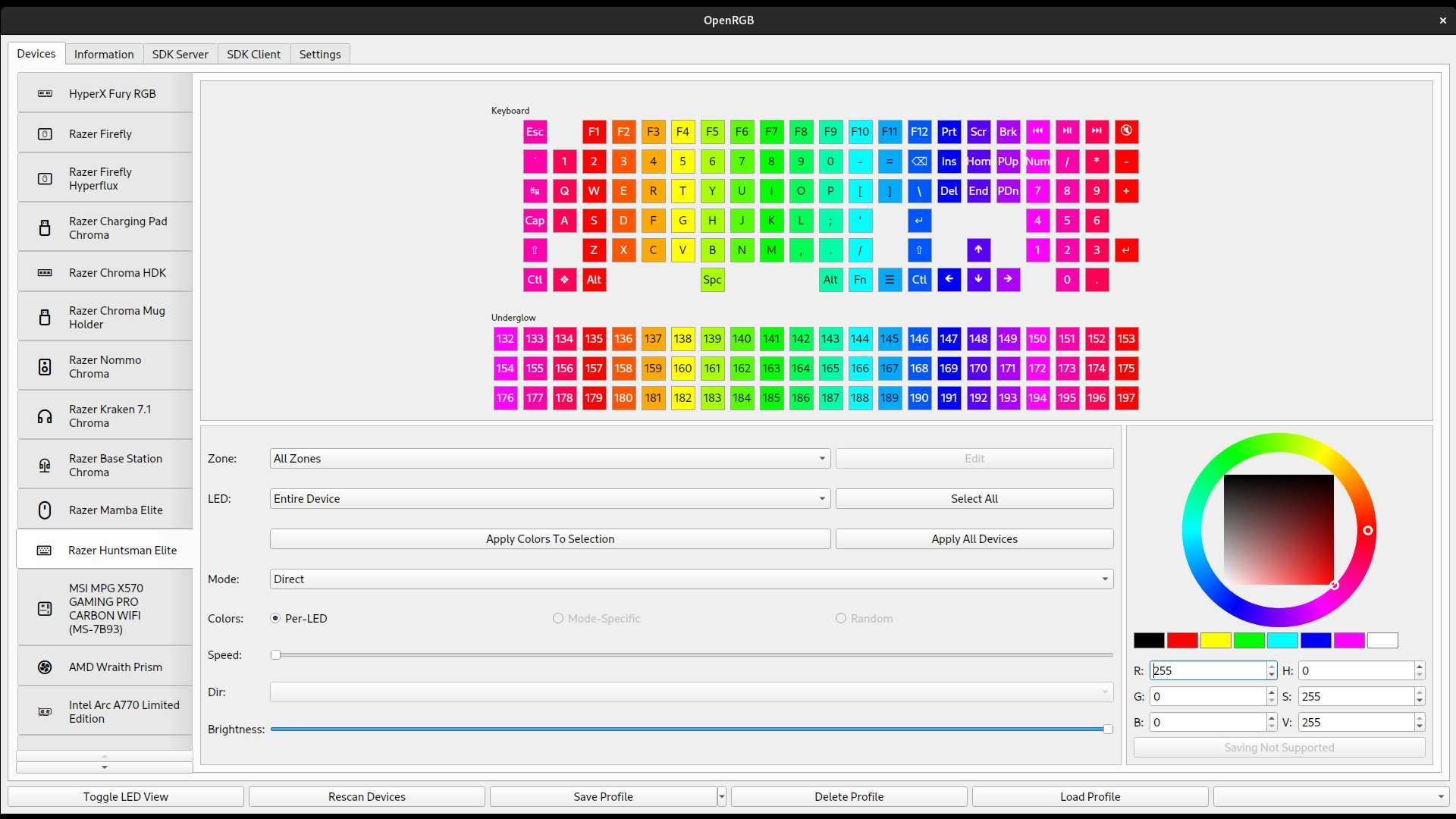
OpenRGB user interface

Control RGB without wasting system resources

Lightweight User Interface

OpenRGB keeps it simple with a lightweight user interface that doesn't waste background resources with excessive custom images and styles. It is light on both RAM and CPU usage, so your system can continue to shine without cutting into your gaming or productivity performance.
OpenRGB rules them all

Control RGB from a single app

Eliminate Bloatware

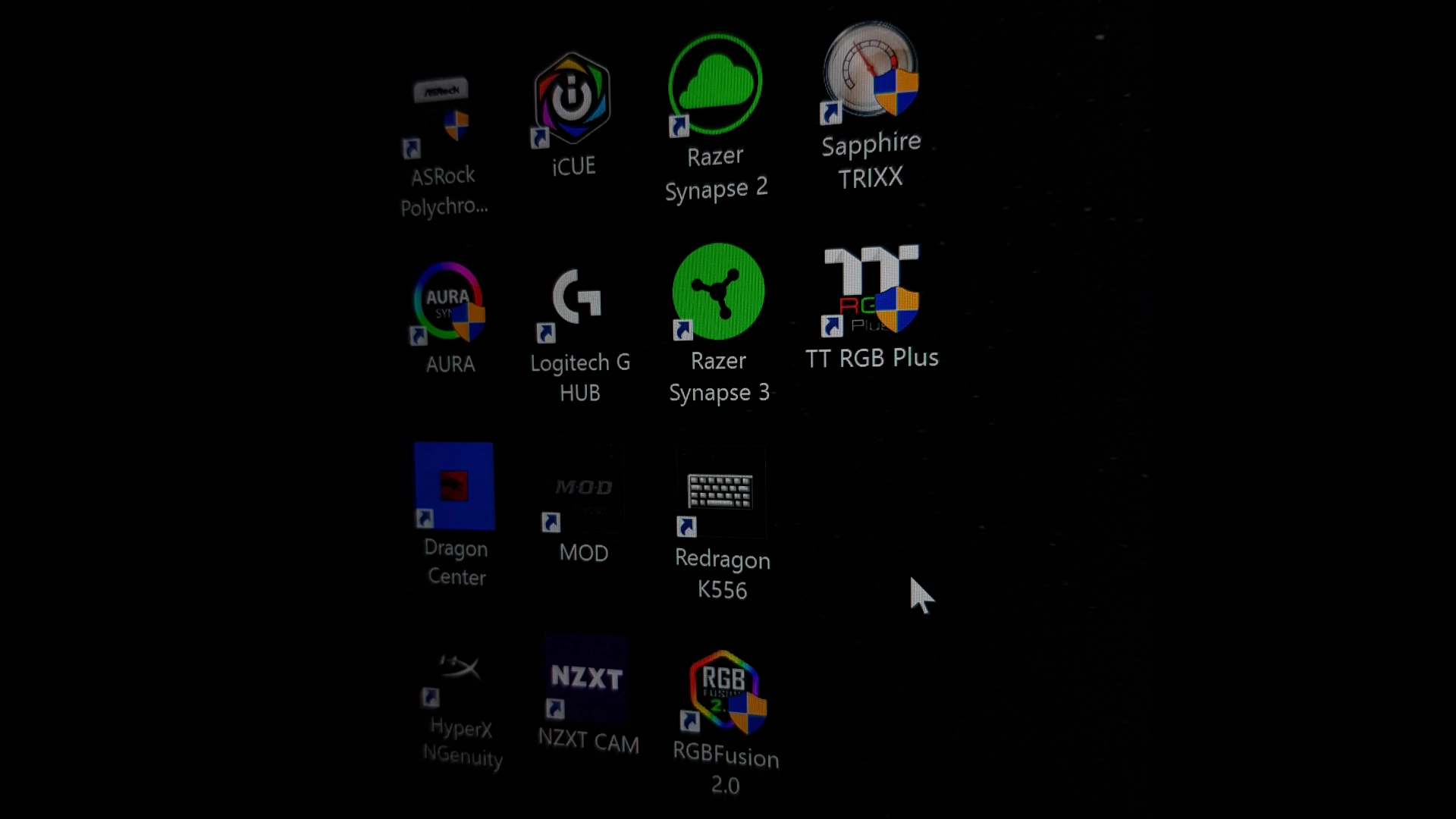
If you have RGB devices from many different manufacturers, you will likely have many different programs installed to control all of your devices. These programs do not sync with each other, and they all compete for your system resources. OpenRGB aims to replace every single piece of proprietary RGB software with one lightweight app.

OpenRGB is open source software

Contribute your RGB devices

Open Source

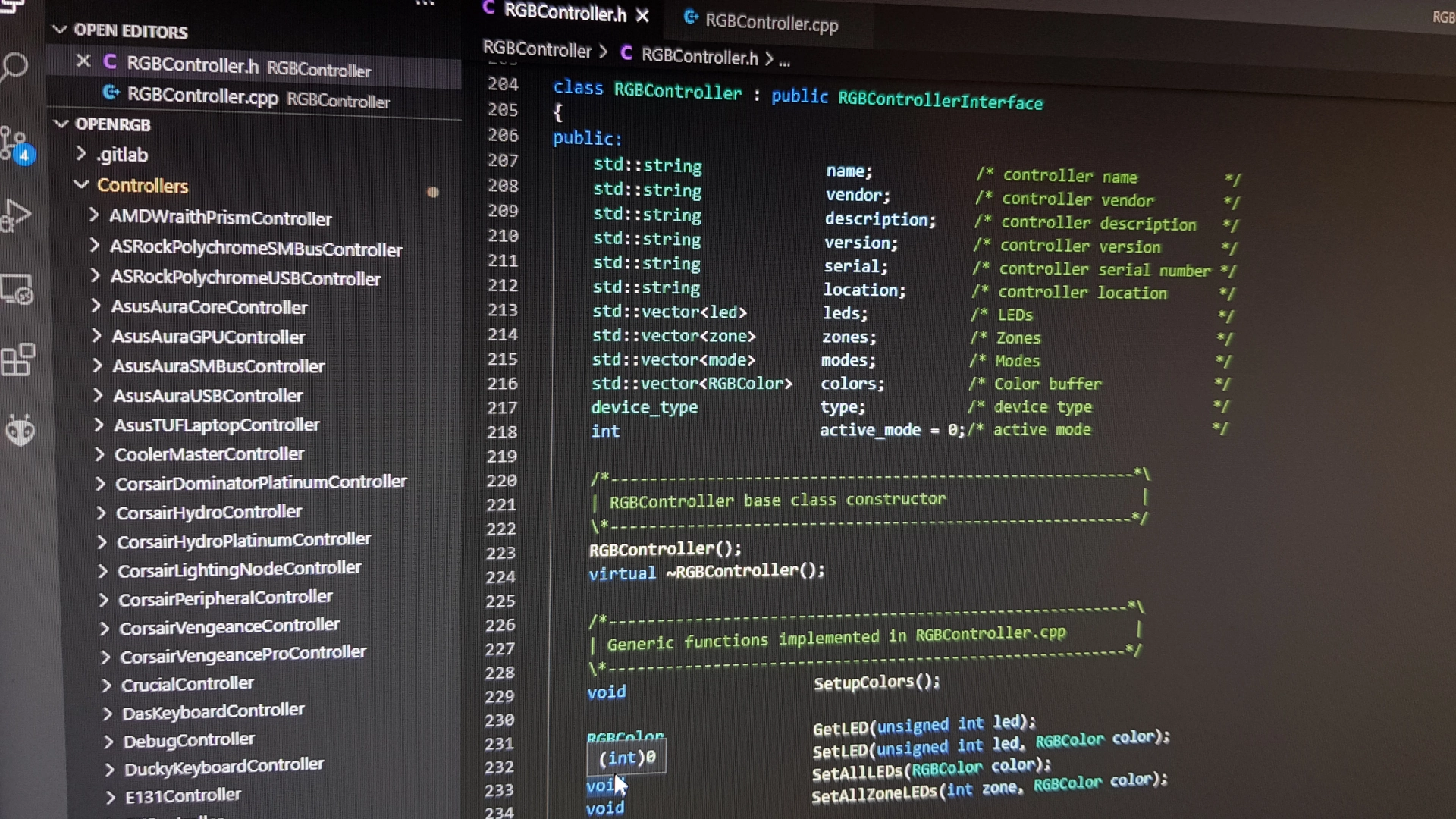
OpenRGB is free and open source software under the GNU General Public License version 2. This means anyone is free to view and modify the code. If you know C++, you can add your own device with our flexible RGB hardware abstraction layer. Being open source means more devices are constantly being added!


Check out the source code on GitLab
OpenRGB is Cross-Platform

Control RGB on Windows, Linux, and MacOS

Cross-Platform

OpenRGB runs on Windows, Linux and MacOS. No longer is RGB control a Windows-exclusive feature! OpenRGB has been tested on X86, X86_64, ARM32, and ARM64 processors including ARM mini-PCs such as the Raspberry Pi.

Olarila Hacked Mountain Lion Iso 405 -

In the realm of cybersecurity, the cat-and-mouse game between hackers and security experts is a perpetual one. Recently, a hacker by the handle "olarila" claimed to have successfully hacked into a Mountain Lion ISO 405, a now outdated version of macOS. This feat, while concerning, presents an invaluable opportunity to dissect the methods and vulnerabilities potentially exploited by olarila. It also underscores the importance of keeping software up-to-date and the continuous battle against vulnerabilities.

macOS Mountain Lion, released in 2012, marked a significant shift towards iOS-inspired features and a more streamlined user experience. The ISO 405 refers to a specific build or version update of Mountain Lion. Given its age, Mountain Lion is no longer supported by Apple, making it a prime target for hackers due to its outdated security patches. olarila hacked mountain lion iso 405

The claim by olarila of hacking Mountain Lion ISO 405 serves as a stark reminder of the ongoing challenges in cybersecurity. It highlights the need for vigilance, regular software updates, and a proactive approach to security. As technology evolves, so too must our strategies for defense, engaging in a continuous cycle of identification, mitigation, and prevention of vulnerabilities. In the realm of cybersecurity, the cat-and-mouse game